Pakistan’s restrictions on helicopter operations are coming under renewed scrutiny after the body of a Pakistani climber who died on Spantik remained on the mountain for a second day, as mountaineers warn that the country’s rescue system is ill-equipped to respond to emergencies above base camp.
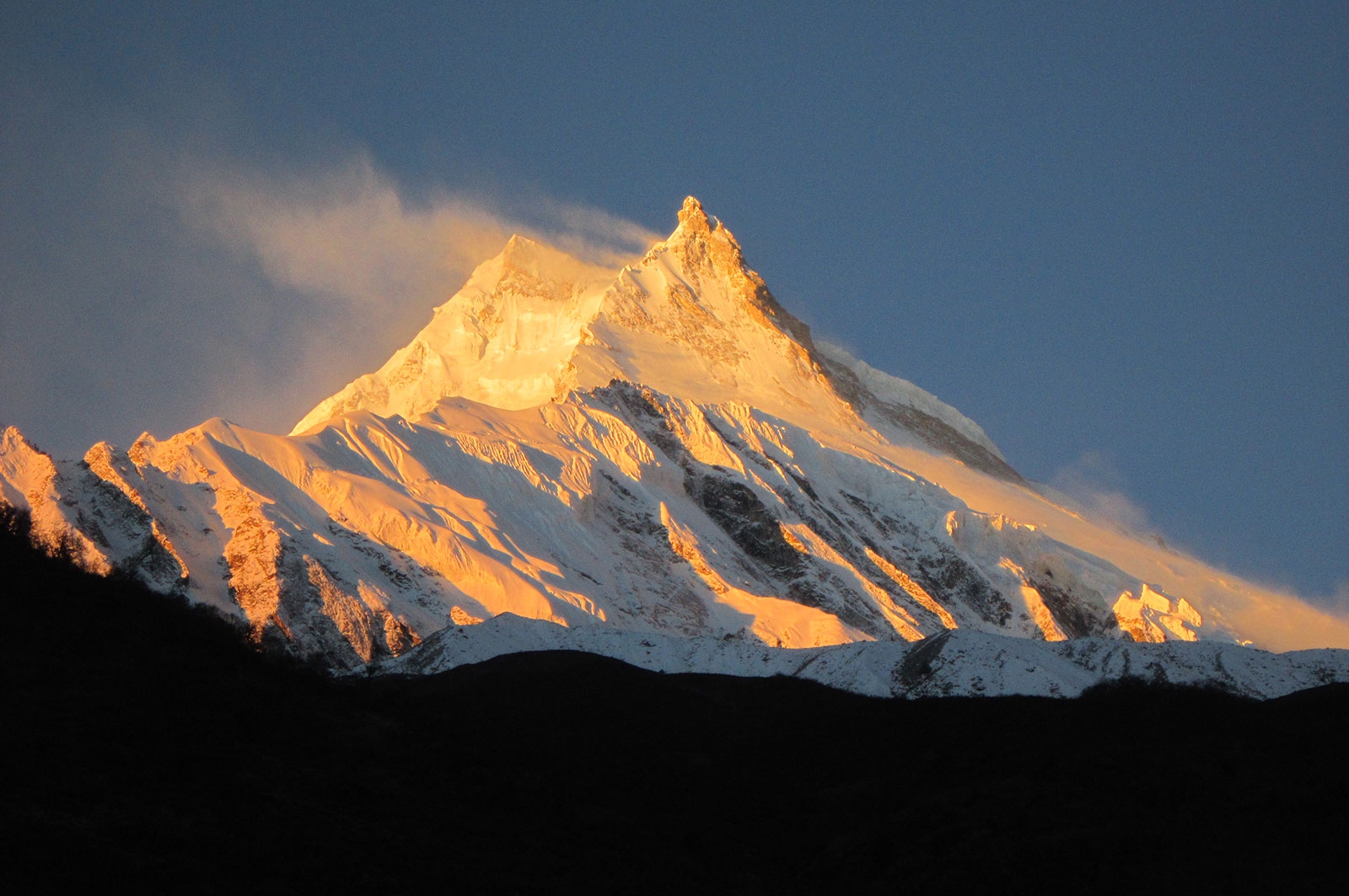
Asma Mushtaq, 34, a doctor-turned-mountaineer, died on Thursday after suffering a serious high-altitude medical emergency while descending Spantik, a 7,027-metre peak in the Karakoram range, according to the Alpine Club of Pakistan.
Mushtaq had successfully reached the summit and was in good health before beginning her descent, the club said.
Her body remained at Camp III on Friday evening. Pakistani record-holding climber Kashif Shehroze, who has volunteered to oversee the recovery, said he had assembled a six-man team of porters to climb up and bring down the body.
“Heli rescue is critical and imminent in order to recover the body in time and safe condition,” Shehroze wrote on Instagram, appealing to the authorities to arrange a helicopter.
The difficulties surrounding Mushtaq’s recovery have highlighted wider concerns about Pakistan’s mountain rescue system, particularly the limited availability of aerial evacuation above base camp.
The Karakoram has suffered a series of fatal accidents this summer. An avalanche on Broad Peak last month killed 10 climbers, including the celebrated Nepali mountaineer Nirmal Purja 'Nimsdai'. On Friday, the body of American climber Sarah Mallory Geis was recovered from the mountain, almost three weeks after the avalanche.
One Nepali climber, Nawang Thindu Sherpa, remains on Broad Peak at about 6,200 metres after rescuers were unable to safely reach his body.
Dawa Sherpa, widely known as Speed Dawa, who took part in the Broad Peak recovery operation, said the body was located in an extremely dangerous position where rescuers faced the risk of avalanches from three directions.
“The only option” for recovering it was a long-line helicopter operation, he told Everest Chronicle. But such operations are not currently available to climbers in Pakistan.
The Broad Peak operation, led by record-holding climber Mingma Gyalje Sherpa, took six days and involved repeated exposure to avalanche danger. One avalanche nearly swept Dawa away, he said.
Mingma Gyalje, known as Mingma G, said on Thursday that climbers should not rely on helicopter rescue in Pakistan if an accident occurs above base camp.
“I would never recommend relying on helicopter rescue in Pakistan in the event of an accident above base camp,” he wrote on Instagram. “Accidents involving climbers frequently occur at these altitudes, yet the country currently lacks any immediate aerial evacuation facilities.”
Pakistan is home to five of the world’s 14 peaks above 8,000 metres — K2, Nanga Parbat, Broad Peak, Gasherbrum I and Gasherbrum II — making reliable high-altitude rescue a crucial part of its mountaineering infrastructure, Mingma G said.
“I strongly urge the government to prioritise the development of rapid-response evacuation services for incidents above base camp,” he wrote.
Pakistan has experienced pilots capable of operating in the mountains, he said, but they are constrained by the system.
“Pakistani climbers are arguably the physically strongest on 8,000-metre peaks, yet they lack confidence because the rescue system in Pakistan is severely inadequate,” he said, adding that climbers fear being left stranded if an accident occurs.
Mingma G said that if aerial rescue had been available during the Broad Peak recovery, the operation could have taken minutes rather than days.
“I would not be able to explain the difficulty and risk we endured on Broad Peak to retrieve the bodies of our beloved ones,” he said. “Had aerial rescue been available, it would have been the work of only a few minutes; instead, it took us six agonising days because of its absence.”
Naila Kiani, one of Pakistan’s leading high-altitude climbers, responded to Mingma G’s comments by saying that she hoped the tragedy would lead to improvements in the country’s mountaineering infrastructure.
The helicopter rescue system in Pakistan is closely linked to the military, with the army operating the helicopters used for mountain rescues and the Alpine Club of Pakistan headed by a serving or retired army general. The arrangement has led climbers and expedition operators to argue that greater flexibility is needed for emergencies above base camp.
In neighbouring Nepal, private helicopter operators are routinely used for mountain rescues and evacuations, including from high-altitude areas, subject to weather and operational conditions.
For Mushtaq’s family, however, the debate over the system remains an immediate and painful one: her body is still on Spantik, while climbers and porters prepare to attempt a recovery without the aerial support they say could make the operation considerably safer.